










Blackjack in One Minute
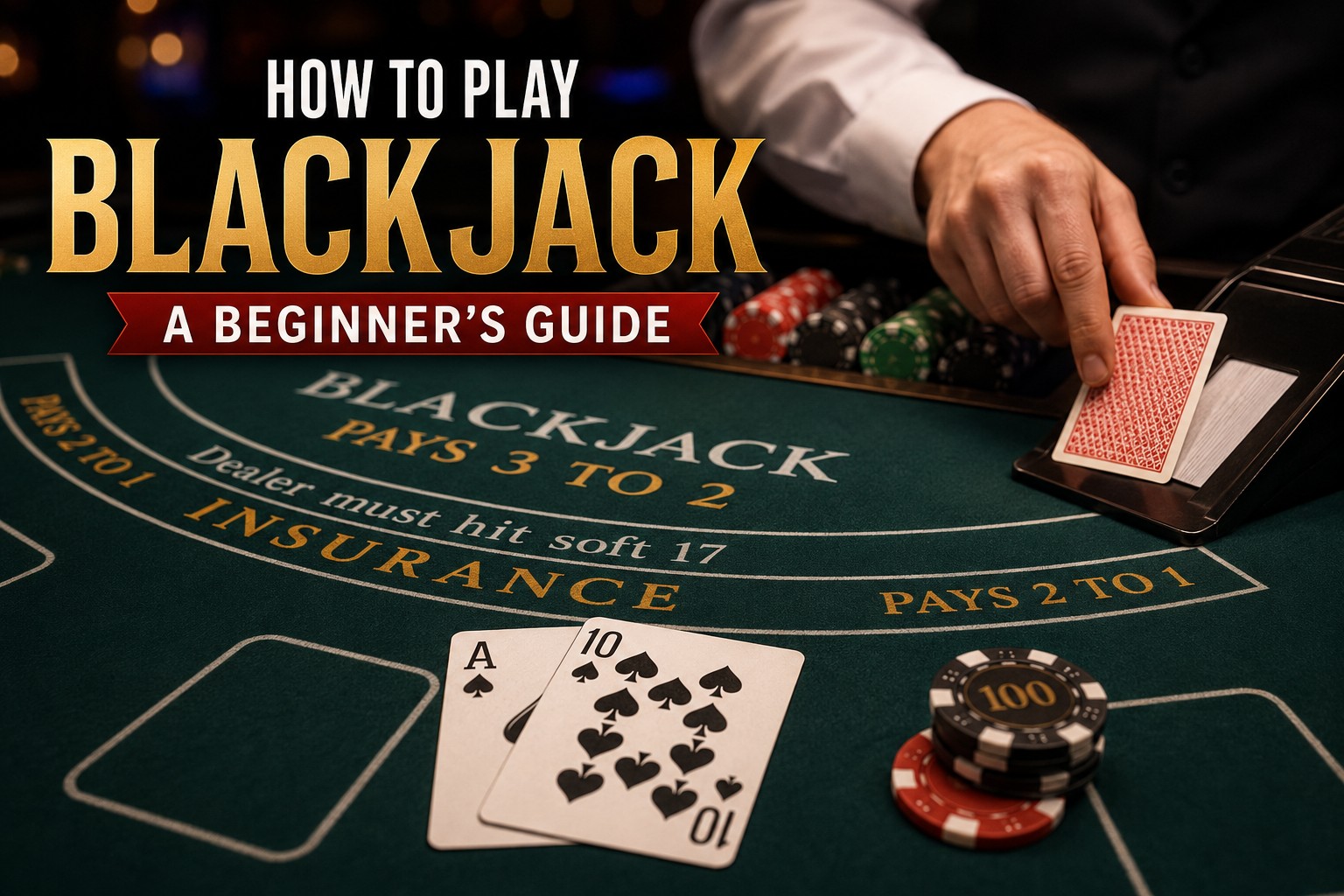
Blackjack, also known as 21, is a card game where you play against the dealer only, never against the other players at the table. The goal is to finish with a hand closer to 21 than the dealer without going over it, and because every hand gives you a real decision, blackjack rewards skill more than luck compared with almost anything else on a casino floor.
- Number cards are worth face value, face cards are worth 10, an Ace is worth 1 or 11
- A natural blackjack, an Ace with any 10-value card, usually pays 3:2
- On your turn you can hit, stand, double down, split and sometimes surrender
- The dealer plays by fixed rules and normally draws until reaching 17
- Following basic strategy keeps the house edge below 1% at most tables
The Basic Objective
The goal in blackjack is simple: finish with a hand value closer to 21 than the dealer’s hand, without going over 21, which is called busting. You are not competing against the other players at the table, only against the dealer, which makes it a more personal and more strategic experience than a game like poker.
Card values work as follows:
- Number cards, 2 through 10, are worth their face value
- Face cards, Jack, Queen and King, are each worth 10
- Aces are worth either 1 or 11, whichever benefits your hand more
A natural blackjack, an Ace paired with any 10-value card as your first two cards, is the best possible hand and typically pays at 3:2, so a $10 bet returns $15 in winnings. Some tables pay 6:5 on the same hand instead, which is a meaningfully worse deal and worth walking away from.
How a Round Works
Each round begins with players placing their bets before any cards are dealt. The dealer then gives every player two cards face up and takes two cards for themselves, one face up and one face down, known as the hole card. From there, each player decides how to play their hand using a handful of possible actions:
- Hit: take another card to increase your hand’s total
- Stand: keep your current total and end your turn
- Double down: double your original bet in exchange for exactly one more card
- Split: if your first two cards are a matching pair, split them into two separate hands, each with its own bet
- Surrender: available at some tables, this lets you forfeit half your bet and end the hand early, avoiding a likely loss
Once every player has acted, the dealer reveals the hole card and plays out their hand by fixed rules, typically drawing until reaching at least 17. Whether the dealer hits or stands on a soft 17 varies by table and shifts the house edge, so it is worth checking before you play.
Why Basic Strategy Matters
Unlike most casino games, blackjack rewards skill. Every hand you can be dealt, against every possible dealer upcard, has a mathematically correct decision, and the full set of those decisions is called basic strategy. It is normally presented as a single chart that tells you exactly what to do in any situation.
Playing by basic strategy will not win you any particular hand, but it does bring the house edge down to below 1% in many games, which makes blackjack one of the fairest bets in the building. Players who ignore it and rely on instinct give up a large chunk of that advantage, often pushing the effective house edge above 2%.
A few principles hold true across almost every blackjack variation:
- Always hit a hard total of 8 or lower
- Always stand on a hard total of 17 or higher
- Generally stand on 12 to 16 when the dealer shows a weak upcard, 2 through 6, since the dealer is more likely to bust
- Generally hit 12 to 16 when the dealer shows a strong upcard, 7 through Ace
- Always split pairs of Aces and 8s
- Never split 10-value cards or 5s
Blackjack Variations You Will Meet
Not all blackjack games are identical. Casinos and online platforms offer a range of variants, including Atlantic City Blackjack, Vegas Strip Blackjack, European Blackjack and more specialized games such as Spanish 21 or Blackjack Switch. Each one sets its own rules around deck count, doubling, splitting and surrender availability, and those differences change both the correct play and the underlying house edge.
The practical takeaway is to read the rules panel of whichever table you sit down at before wagering seriously. A detailed breakdown of the individual variations, along with strategy tips for each, is available in this comprehensive blackjack guide.
Common Mistakes New Players Make
A few habits quietly cost new blackjack players money without them noticing:
Taking insurance. When the dealer shows an Ace, they will offer insurance, a side bet that pays out if the dealer has blackjack. It sounds like a safety net, but it is a losing bet over any real number of hands, and basic strategy says to decline it every single time.
Standing out of fear of busting. Many beginners stand on a stiff hand like 12 or 13 simply because going over 21 feels worse than losing slowly, even when the dealer’s upcard makes hitting the statistically correct move.
Ignoring the table rules. Whether the dealer hits or stands on soft 17, whether doubling after a split is allowed, and whether a natural pays 3:2 or 6:5 all shift the edge more than players expect, so it pays to check before sitting down.
Playing Blackjack at a Crypto Casino
Everything above applies online exactly as it does on a casino floor, with a few differences worth knowing. Software blackjack reshuffles a virtual shoe on every hand, so counting cards is pointless there, while live dealer tables deal from a physical shoe streamed in real time and feel much closer to the land-based game. Our live blackjack strategy guide covers table selection and side bets at those tables in more depth.
A few things worth checking before you deposit anywhere:
- What a natural pays, since 3:2 tables are worth seeking out over 6:5
- Whether the game is provably fair or run by a recognized live studio
- Table limits, which vary far more online than they do in a physical casino
- How quickly the site actually pays out, which our fast payout casinos guide covers
If you are still deciding where to play, our crypto casinos for beginners shortlist and the wider crypto casino games overview are good starting points.
Getting Started
Blackjack rewards players who spend a little time on the fundamentals before wagering real money. Practicing with a free demo version, keeping a basic strategy chart open for your first few sessions, and starting at small stakes while you build confidence are all sensible ways to ease into the game. Once the fundamentals are automatic, the rule variations between tables become interesting rather than confusing.
Set a budget before you sit down and treat it as the cost of entertainment rather than an investment. If playing ever stops feeling like a game, our responsible gambling page lists the tools and support available.
FAQs
Yes. The rules take about ten minutes to learn, and with a basic strategy chart in front of you the house edge sits below 1% at a fair table, which is better than almost anything else in a casino.
Not to start with. Online you can keep the chart open next to the table, and the common decisions stick after a few sessions anyway. Memorizing it only really matters in a land-based casino.
A natural blackjack normally pays 3:2, so a $10 bet returns $15. Some tables pay 6:5 instead, which adds roughly 1.4% to the house edge for the same game, so check the payout before you sit down.
No. Insurance loses money over time for anyone who is not counting cards, and it loses money even when you are holding a blackjack yourself. Basic strategy says decline it every time.
Not in software blackjack, where the deck is reshuffled after every hand. Live dealer tables use a real shoe, but frequent shuffles and the pace of play make counting impractical there too.

Lena Marlowe
Casino expert and writer with 10 years of experience
Lena Marlowe is a crypto casino analyst and fintech writer specializing in blockchain gaming, platform transparency, and player safety. She breaks down complex topics into clear, practical insights to help players make informed decisions.