




Crypto Casinos with Minimal Sign-Up Data

BC.Game is a crypto casino and sportsbook operating since 2017, currently run by Twocent Technology Limited under an Anjouan license. It supports over 150 cryptocurrencies with built-in swap tools, offers…

A highly rated online casino offering an extensive selection of games for every type of player. Enjoy a diverse range of slots, classic table games, and immersive live dealer experiences…

DragonSlots is a dragon-themed online casino launched in December 2024, operated by TechSolutions Group N.V. under the Curacao licensing framework. It offers over 7,000 games from more than 100 providers,…

Mostbet is an online casino and sportsbook operating since 2009, run by Bizbon N.V. under a Curaçao licence. It offers over 3,000 games from 50-plus providers including Pragmatic Play, Evolution…

SpinBetter is an online casino and sportsbook operated by Sprut Group B.V. under a Curacao Gaming Control Board license. It combines thousands of games from over 100 providers with full…

Safe, secure, and fair gaming environment. The casino uses SSL encryption to protect all transactions and personal information. Random number generators ensure fair outcomes for all casino games. Players can…
What Is an Anonymous Bitcoin Casino?
An anonymous bitcoin casino is a platform that collects as little personally identifiable information as possible during registration and play. In the most minimal cases, signing up requires only an email address and a password. Some platforms go further and accept wallet-connect logins that need no email at all. The common thread is that the casino is not linking your play to a government ID, a bank account, or a billing address.
It is worth drawing a clear line between anonymous and no KYC, because the two terms get used interchangeably and describe different things. Anonymous refers to the data collected at sign-up and during your session: an anonymous casino asks for little by design. No KYC refers specifically to identity verification on withdrawals: whether a passport or proof of address is requested before funds are released. A platform can be both, or one without the other. This page is about the first: what information these operators actually hold on you.
How These Operators Compare on Data
Each casino in the grid above sits somewhere different on the privacy spectrum. Here is what registration and verification actually look like at each, drawn from our full reviews.
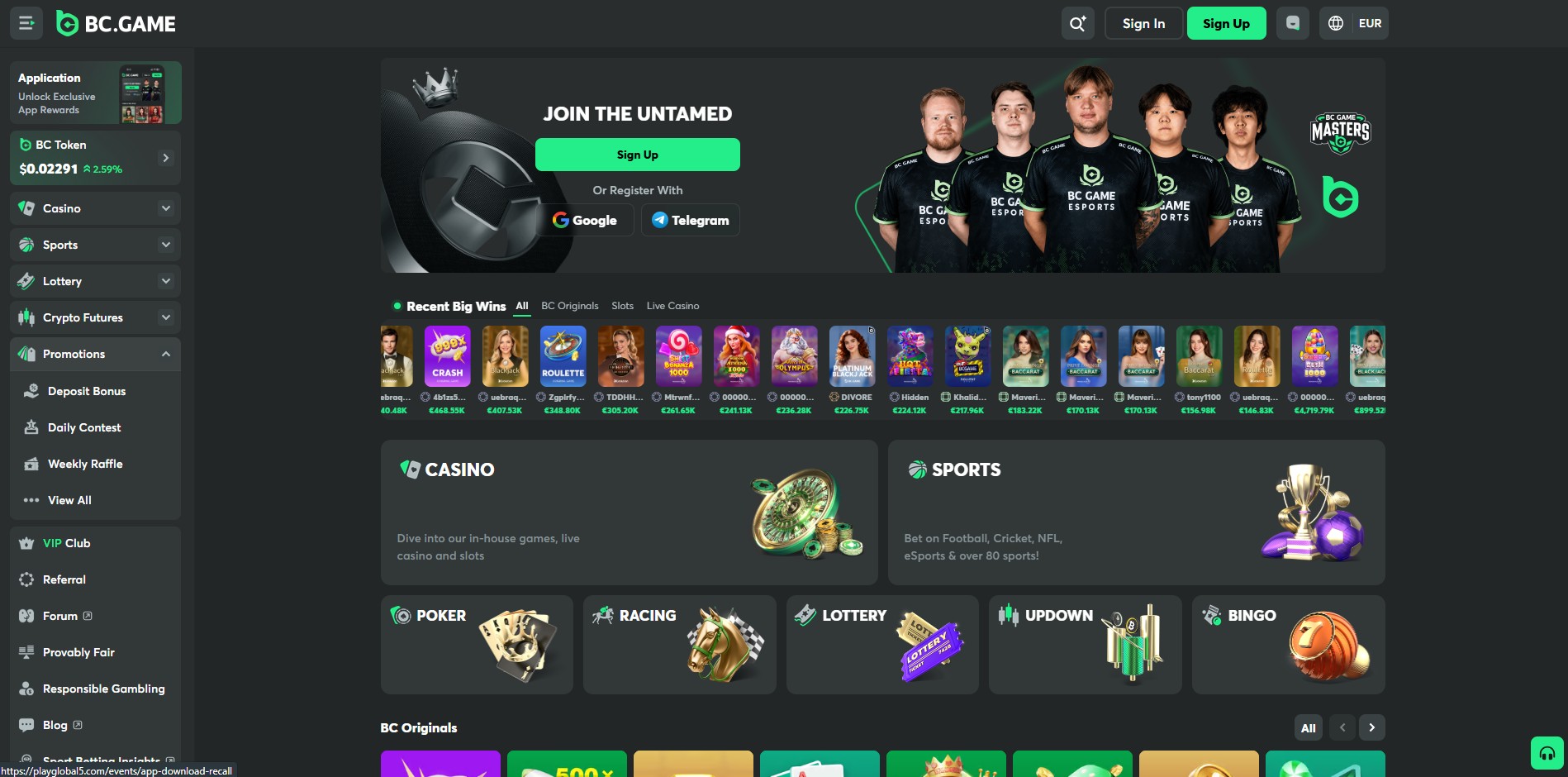
BC.Game
Running since 2017 under Twocent Technology Limited and an Anjouan licence, BC.Game is the most crypto-native platform in this grid. Registration takes an email and password, or a social login, and standard play generally works without upfront verification. The privacy-relevant strength here is breadth: over 150 supported cryptocurrencies with built-in swap tools, so you are rarely forced onto a transparent chain you would rather avoid. Withdrawals are fee-free and typically clear within the hour, with a monthly ceiling around $10,000 that tightens for large winners. The trade-off is that KYC can be requested at any point and commonly is at withdrawal thresholds. The provably fair originals suite is audited by iTech Labs, which matters in this context: it lets you verify outcomes cryptographically rather than trusting the operator’s word. Minimums sit at $5 in both directions.
SpinBetter
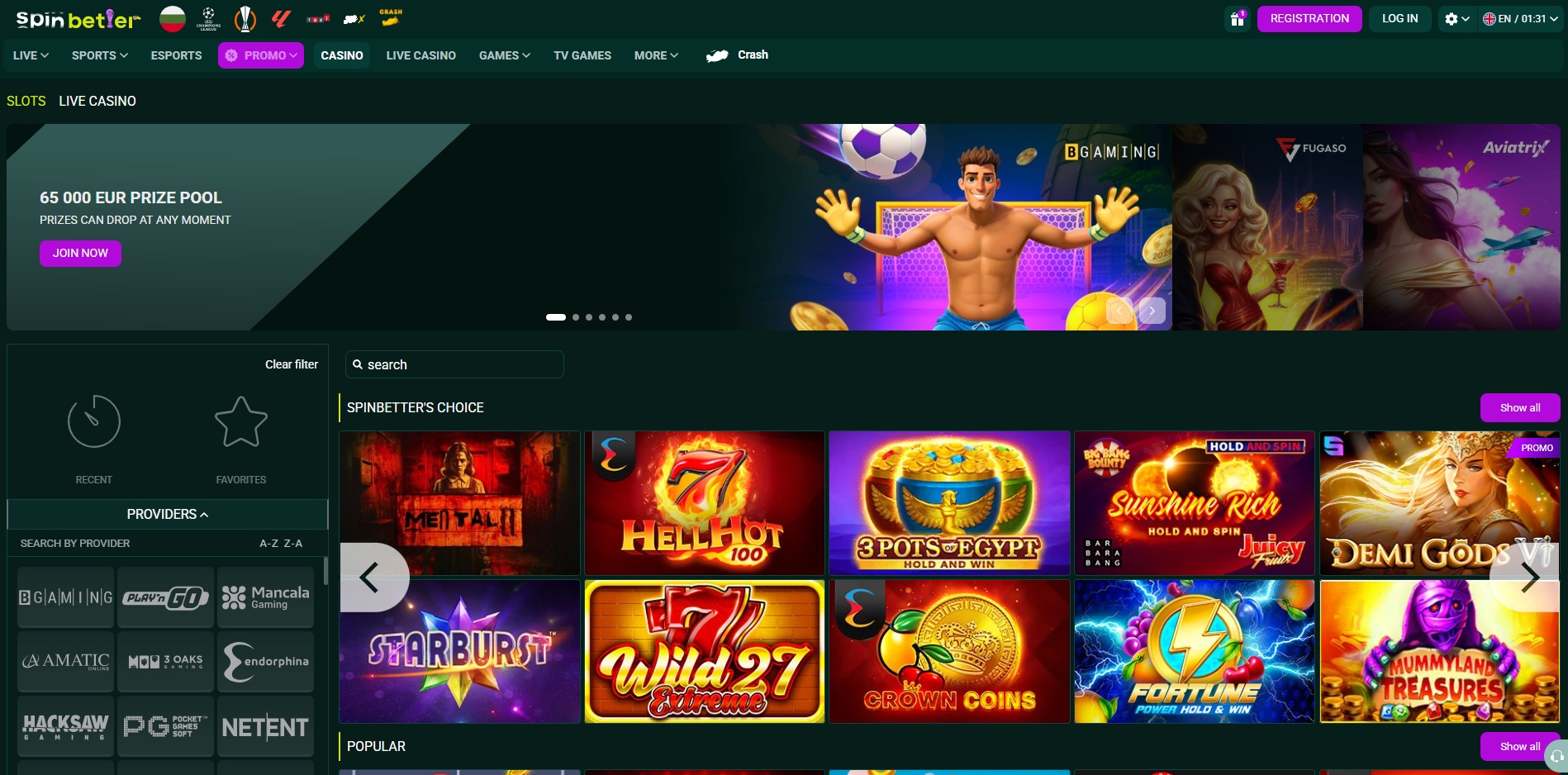
Operated by Sprut Group under a Curaçao Gaming Control Board licence and running since 2018. Sign-up offers a choice of email or phone registration, and that choice matters more than it looks: a phone number is a far stronger identifier than an email address, so pick email if data minimisation is your priority. Crypto coverage is wide, spanning BTC, ETH, USDT, LTC, DOGE, TRX, XRP and a long tail of smaller coins, with no platform fees in either direction. Deposits start from roughly €1 and crypto payouts are auto-processed, often inside 15 minutes. Two caveats sit against that. The daily withdrawal cap of about €1,500 turns any large cashout into a multi-day exercise, and verification is where most player complaints concentrate, so upload documents early rather than at the moment you want your money.
Mostbet
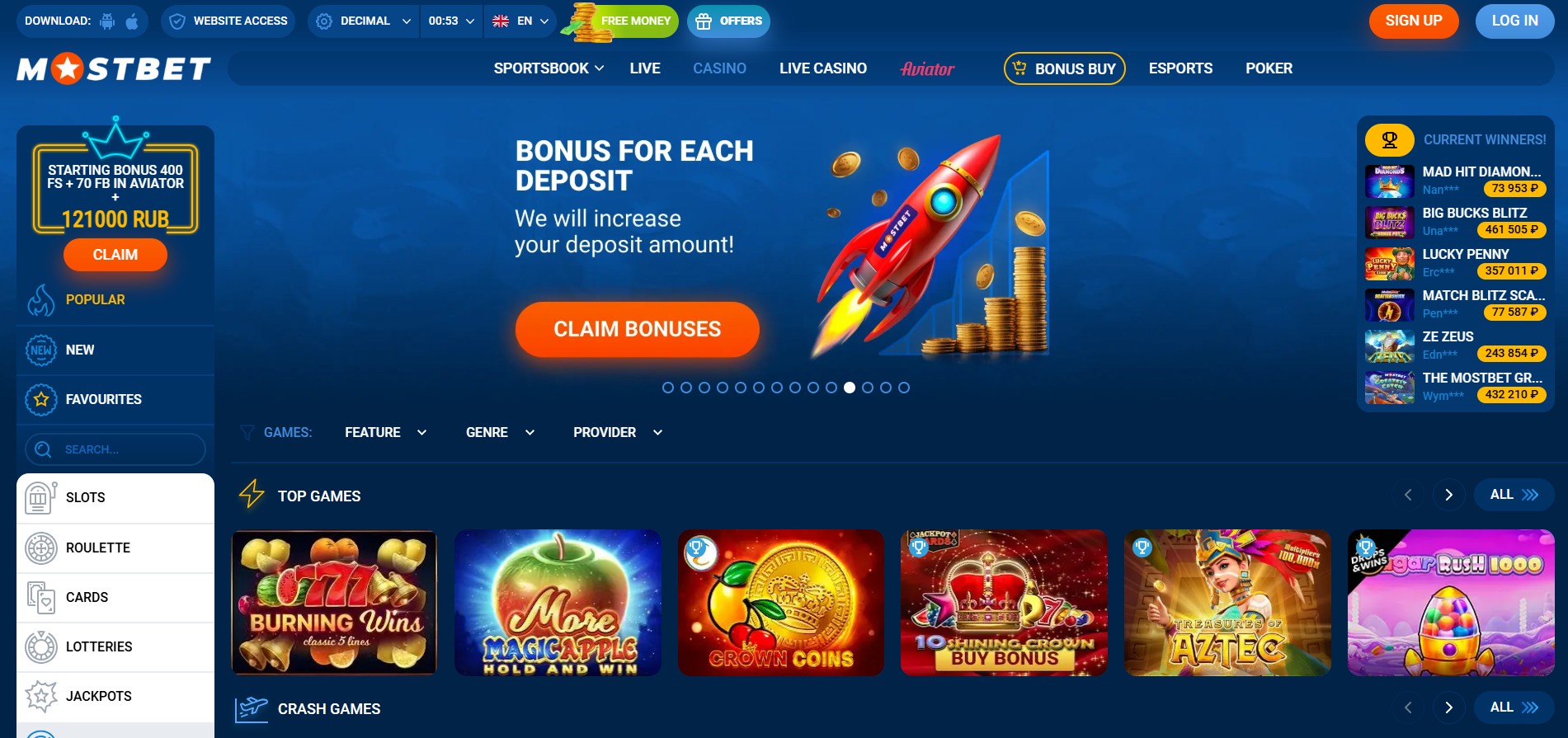
Mostbet has been running since 2009, unusual longevity in this segment, operating under a Curaçao licence through Bizbon N.V. Registration is the fastest here, with a one-click option alongside email, phone and social sign-up. That speed is deceptive from a privacy standpoint: KYC is applied before withdrawals as standard and the account flow expects ID and proof of address, so read this as a platform with a light front door and a firm exit. Crypto sits alongside cards, e-wallets and regional methods. Minimums are just $2 either way, with a $5,000 daily and $50,000 monthly ceiling and payouts typically inside 24 hours. One transparency gap worth naming: Mostbet publishes no clear list of restricted countries, so checking the legal position where you live is entirely on you.
DragonSlots
The newest name in the grid, launched in December 2024 under TechSolutions Group N.V. within the Curaçao framework, and backed by the group behind Bizzo and National Casino. Registration is quick and asks only for email, password and currency, with no documents at that stage. Crypto support is genuinely broad: BTC, ETH, USDT including Solana network support, LTC, DOGE, XRP, ADA, BNB and SOL, with no operator-side fees. Crypto payouts usually complete within one to 24 hours and the €50,000 monthly ceiling is generous. Be clear-eyed about the trade, though. DragonSlots requires KYC before your first withdrawal without exception, and our own review lists that as a drawback. If ID-free cashouts are what you are after, this is not the platform, whatever the sign-up form suggests.

Whale.io
Whale.io launched in 2023 under Whale Operations Ltd and is crypto-focused in design, carrying BTC, ETH, LTC and USDT on both ERC-20 and TRC-20. Instant withdrawals are the headline, with a €20 minimum and a €5,000 daily ceiling. On data collection, though, it is the most conventional platform in this grid. Registration asks for email, username and password, and the account setup flow expects a valid ID and proof of address to unlock full features. KYC applies before withdrawals or any transaction flagged as higher risk. Its responsible gambling tooling is the strongest of the six, with deposit limits, reality checks and self-exclusion built in. Read Whale.io as a well-run crypto casino with conventional verification rather than a minimal-data option.

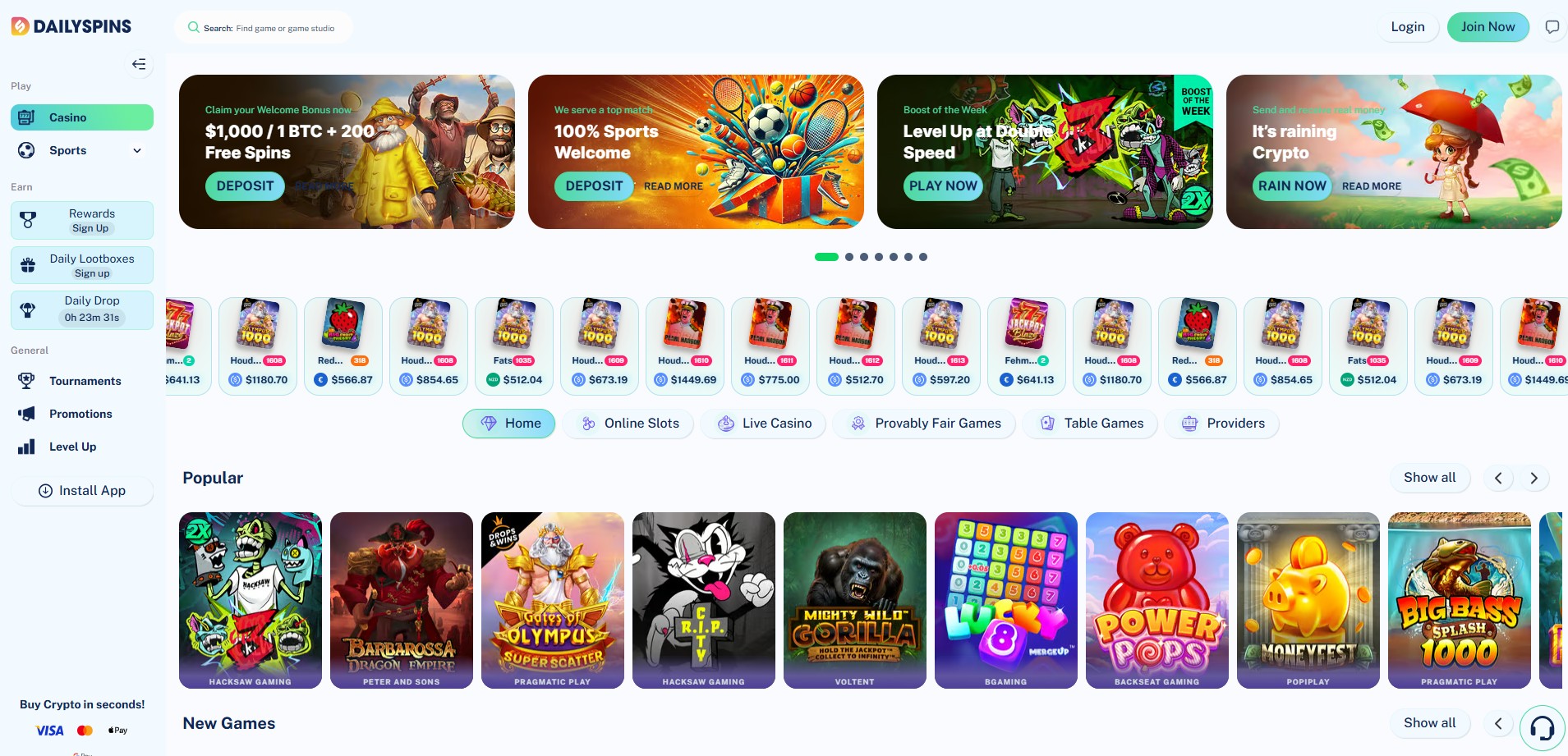
DailySpins
DailySpins launched in 2024 under Novatrix SRL and is built around daily promotions and a slot-heavy library from Pragmatic Play, NetEnt, Play’n GO, Microgaming and Evolution. Crypto payments are supported and withdrawals process quickly. From a privacy perspective this is the tightest of the six. Registration asks for email, username and password, then expects ID and proof of address uploaded to your profile before full account features and faster payouts unlock, and KYC appears as a drawback in our own review. Withdrawal ceilings are modest by comparison too, at roughly €100 daily and €1,000 monthly, which makes this a casual-stakes option rather than one for a meaningful bankroll. A reasonable pick if you want daily free spins and do not mind verifying.
One pattern is worth naming across all six: none of them is a no-KYC operator. Minimal sign-up is common, verification before withdrawal is close to universal, and that gap between the two is exactly why the distinction at the top of this page matters.
Why Bitcoin Is Pseudonymous, Not Anonymous
This is the part most pages in this category skip, and it matters more than any operator comparison. Bitcoin is not anonymous. Every transaction is recorded on a public blockchain and is visible by wallet address to anyone who cares to look, permanently.
What pseudonymity means in practice is that a wallet address is not automatically attached to your legal name. The link only forms when something else creates it: an exchange that holds your KYC documents, a bank transfer used to buy the coin, a peer-to-peer trade, or a data breach somewhere in the chain. Once that link exists it is permanent and it applies retroactively to the entire history of that address.
So an anonymous casino does something narrower than the marketing implies. It reduces the number of connection points between your identity and your wallet activity. It does not make the activity invisible.
How Data Minimisation Actually Protects You
The protection an email-only casino offers rests on a simple principle: the less a platform collects, the less there is to lose. A casino holding your name, address, passport scan and card details is a far larger breach target than one holding an email address and a transaction history. The same logic applies to legal requests and to third-party data sales.
Wallet-connect sign-in extends this further. If you authenticate with a crypto wallet rather than an email, the operator never receives a personal identifier at all. The wallet address becomes the account, and the only record is the transaction history tied to it.
Provably fair systems address a related concern. Where a game outcome is generated from a published server seed and client seed, you can verify after each round that the result was not manipulated. That does not reduce data collection, but it removes the need to trust the operator’s internal systems on fairness. Our casino games guide explains how the verification works in practice.
One thing worth being clear about: every platform in this category still logs IP address and device information, as described in their privacy policies. This is standard across the industry and is generally required for fraud prevention and platform security. Minimal-data does not mean no data.
Privacy Coins Compared
If transaction privacy matters to you specifically, the coin you choose does more work than the casino you choose.
| Coin | Privacy Model | Strength | Practical Catch |
|---|---|---|---|
| Monero (XMR) | Private by default | Strongest | Accepted at relatively few casinos |
| Zcash (ZEC) | Optional shielded transactions | Strong when shielded | Both sides must support shielded addresses |
| Dash | Optional CoinJoin mixing | Moderate | Opt-in; mixing patterns can be analysed |
| Bitcoin, USDT, ETH | Fully transparent ledger | None | Every transaction publicly traceable |
Monero is the most robust option available. It uses ring signatures to obscure the sender, stealth addresses that cannot be linked back to the recipient’s public key, and RingCT to hide amounts. Crucially, there is no transparent mode: every Monero transaction is private by default, so there is no way to configure it wrongly.
Zcash uses zk-SNARK cryptography to prove a transaction is valid without revealing sender, recipient or amount. Technically comparable to Monero when shielded, but shielding is optional and requires support at both ends, so confirm the casino handles shielded addresses before relying on it.
Dash offers PrivateSend, a CoinJoin-based mixing feature that splits transactions into standard denominations and mixes them with other users. Weaker than Monero because it is opt-in and the denomination patterns can sometimes be reconstructed by analysis.
None of the six operators above currently lists a dedicated privacy coin in its cashier, which is worth knowing before you plan around one. If you are staying with Bitcoin or USDT, the single most useful habit is generating a fresh wallet address for each casino deposit. It prevents a pattern from accumulating against one address in the public record, costs nothing, and takes about two minutes. Our payment methods guide covers each coin and network in more depth.
The Limits of “Anonymous”
This section is the honest counterweight to the rest of the page. Everything below is true regardless of which operator you pick.
- The blockchain is permanent and public. On-chain BTC and USDT transactions stay visible on block explorers forever. If your address is ever linked to your identity, that link reaches backwards across its whole history.
- An email-only casino still has your email. Exposed in a breach or produced under a legal request, it connects back to the account and its activity. A dedicated address with no other associations reduces that exposure without eliminating it.
- KYC can still be triggered. Minimal sign-up does not guarantee ID-free withdrawals. Large cashouts, or accounts flagged for unusual patterns, can prompt verification at any platform.
- IP logging is universal. A VPN changes what the casino sees, but VPN providers keep their own logs and answer their own legal requests. Treat a VPN as one layer, not a solution. Note also that using one to bypass a geographic block is a terms violation, not a legal workaround.
- Lighter regulation means weaker recourse. Operators in this category are typically licensed in Curaçao or Anjouan. If a payment dispute arises there is no national ombudsman with jurisdiction to force a resolution.
- Anonymity changes nothing legally. Gambling laws and tax obligations apply based on where you live, not on how much data an offshore operator collects about you.
Are Anonymous Bitcoin Casinos Safe and Legal?
Legality depends on your jurisdiction, not on the operator’s data practices. Many platforms in this category block players from the United States, the United Kingdom, Australia and other markets by IP and by terms of service. Check the legal position where you live before depositing.
On safety, the assessment is separate from the privacy question entirely. A casino can collect almost nothing and still be slow to pay or unresponsive to disputes. What actually predicts reliability is operational track record: how long the platform has been paying withdrawals at scale without a pattern of complaints. That matters more in this sector than it would with a fully regulated European operator, precisely because the formal escalation routes are thin.
The practical approach is the same as for any crypto casino. Verify the licence number in the footer, read recent independent player reports rather than testimonials, start with a small withdrawal to confirm the payment path works, and avoid holding a large balance on the platform for longer than you need to. Every operator in our best crypto casinos rankings has been through real deposit and withdrawal testing, and our instant withdrawals guide covers what affects payout speed.
If you are new to crypto gambling generally, our beginners guide covers the earlier steps before privacy becomes the main concern.
Play Within Your Limits
Minimal-data sign-up removes friction, and less friction can make it easier to play more than you intended. Decide what you are willing to lose before your first deposit rather than after a losing session, and use the deposit and session limits available in account settings.
If gambling has stopped feeling recreational, free confidential support is available. BeGambleAware (begambleaware.org) and GamCare (gamcare.org.uk) both offer live chat and helplines. In the US, the National Problem Gambling Helpline is on 1-800-522-4700. 18+ only.
This page contains affiliate links. We may earn a commission if you sign up through them, at no extra cost to you. Gambling involves financial risk. Check that online gambling is legal in your jurisdiction before depositing.
Frequently Asked Questions
It is a casino that collects as little personally identifiable information as possible at sign-up. In the most minimal cases that means an email address and a password, with no government ID, bank details or billing address requested. Some platforms accept wallet-connect logins that need no email at all. It does not mean your transactions are invisible, only that the operator holds very little about you.
Anonymous describes what the casino collects at registration and during play. No KYC describes whether identity verification is demanded before a withdrawal is released. The two often overlap but they are not the same thing, and a platform can offer one without the other. A casino asking only for an email can still request documents when you try to cash out a large sum.
No. Bitcoin is pseudonymous rather than anonymous. Every transaction is permanently recorded on a public blockchain and visible by wallet address to anyone who looks. What is missing is the link between that address and your legal name, and that link forms as soon as a KYC-compliant exchange, a bank transfer or a data breach connects the two. Once it exists, it applies to the entire history of that address.
Monero is the strongest option. It uses ring signatures, stealth addresses and RingCT to obscure sender, recipient and amount, and it has no transparent mode, so every transaction is private by default. Zcash is comparable when shielded, but shielding is optional and needs support at both ends. Dash offers opt-in mixing that is weaker than either. The trade-off with Monero is that fewer casinos accept it.
Yes. Minimal sign-up requirements do not guarantee ID-free withdrawals. Most platforms reserve the right to request verification at any point, and it is commonly triggered by large cashouts, by unusual account patterns, or by regulatory obligations on the operator. Treat a low-data registration as a reduction in friction, not a guarantee that documents will never be asked for.
It changes what the casino sees, nothing more. The VPN provider still logs your activity and still answers legal requests in its own jurisdiction, so you have moved the record rather than removed it. Treat a VPN as one layer among several. Using one to get around a geographic block is also a terms of service violation, which can mean a closed account and forfeited funds, and it is not a workaround for the law where you live.
That depends entirely on where you live, not on how much data the operator collects. Many of these platforms block players in the United States, the United Kingdom, Australia and other regulated markets by IP and by their terms. Anonymity does not change your legal position or any tax obligations that apply to gambling winnings in your country. Check the rules in your jurisdiction before you deposit.
At minimum, an email address if that is how you registered, plus IP address, device and browser information, and a full record of your deposits, wagers and withdrawals. IP and device logging is universal across the industry and is generally required for fraud prevention and platform security. Minimal-data does not mean no data, and the privacy policy of any platform will set out exactly what it keeps.
A few habits do most of the work. Use a dedicated email address with no other associations. Generate a fresh wallet address for each deposit so no pattern accumulates against a single address in the public record. Withdraw to a personal wallet rather than an exchange account tied to your ID. Choose a privacy coin where the casino supports one. Enable two-factor authentication, and avoid leaving a large balance sitting on the platform.

Lena Marlowe
Casino expert and writer with 10 years of experience
Lena Marlowe is a crypto casino analyst and fintech writer specializing in blockchain gaming, platform transparency, and player safety. She breaks down complex topics into clear, practical insights to help players make informed decisions.